Show settings
In the Show settings you can view and edit all the general information for your show. Depending on your role, you may or may not have permission to edit certain fields.
Once a new show has been created, you are automatically redirected to the Show Settings.
Alternatively you can reach the Show settings by selecting a show from the Show List and clicking on Settings in the sidebar navigation.
Basic information
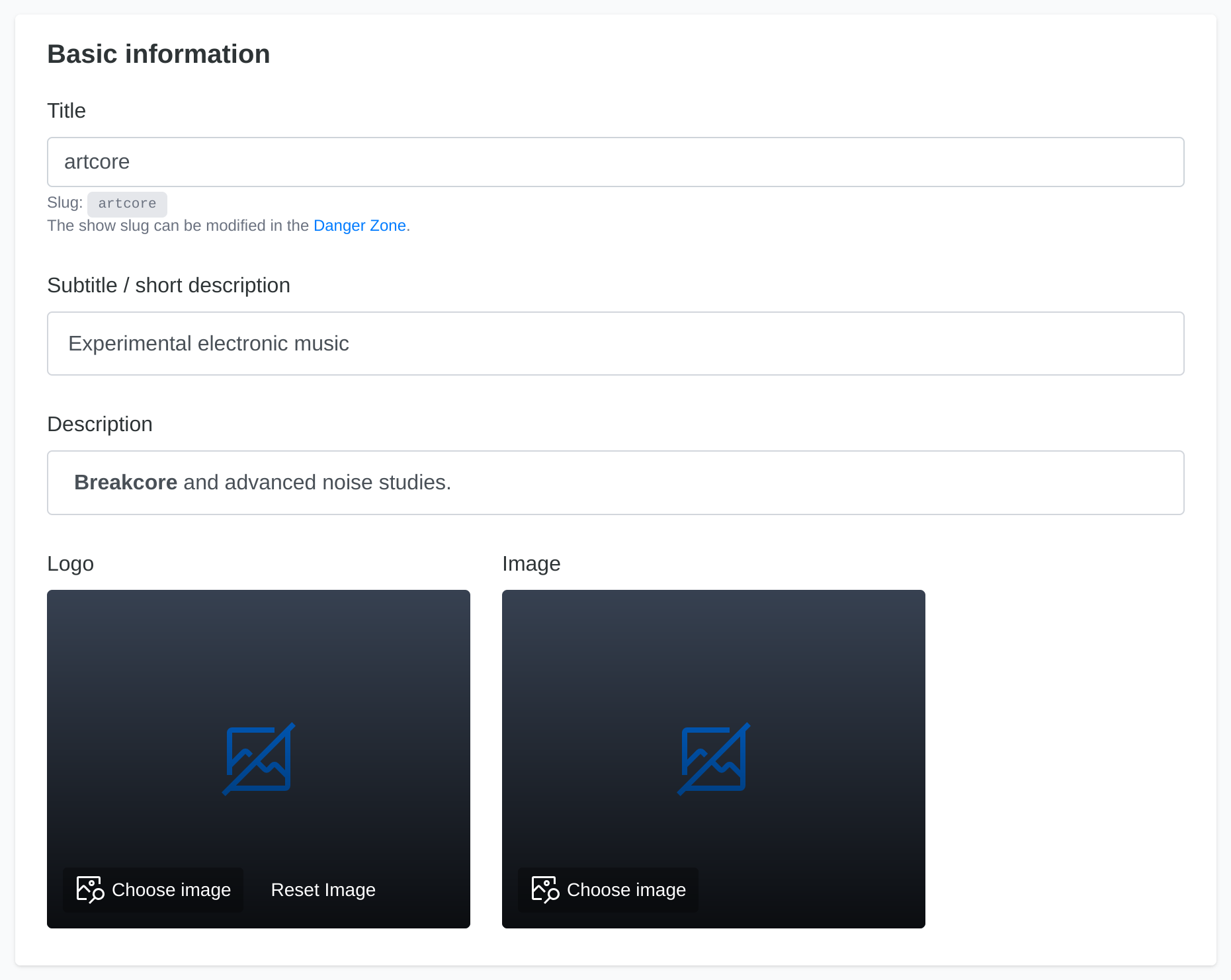
Title (1): Used to automatically generate a Slug, which is required for radio website integrations. The Slug can be modified in the Danger Zone section below.
Subtitle / short description (2): A tagline or short description, typically used to present the show on overview pages of the website. It allows basic inline text formatting.
Description (3): This is where you can provide a detailed show description. It also supports basic inline text formatting.
On air (4): The date of the first broadcast of the show.
Used Storage Quota (5): The amount of storage used by the show.
Logo (6): The logo of the show.
Image (7): The background image of the show.
Content information
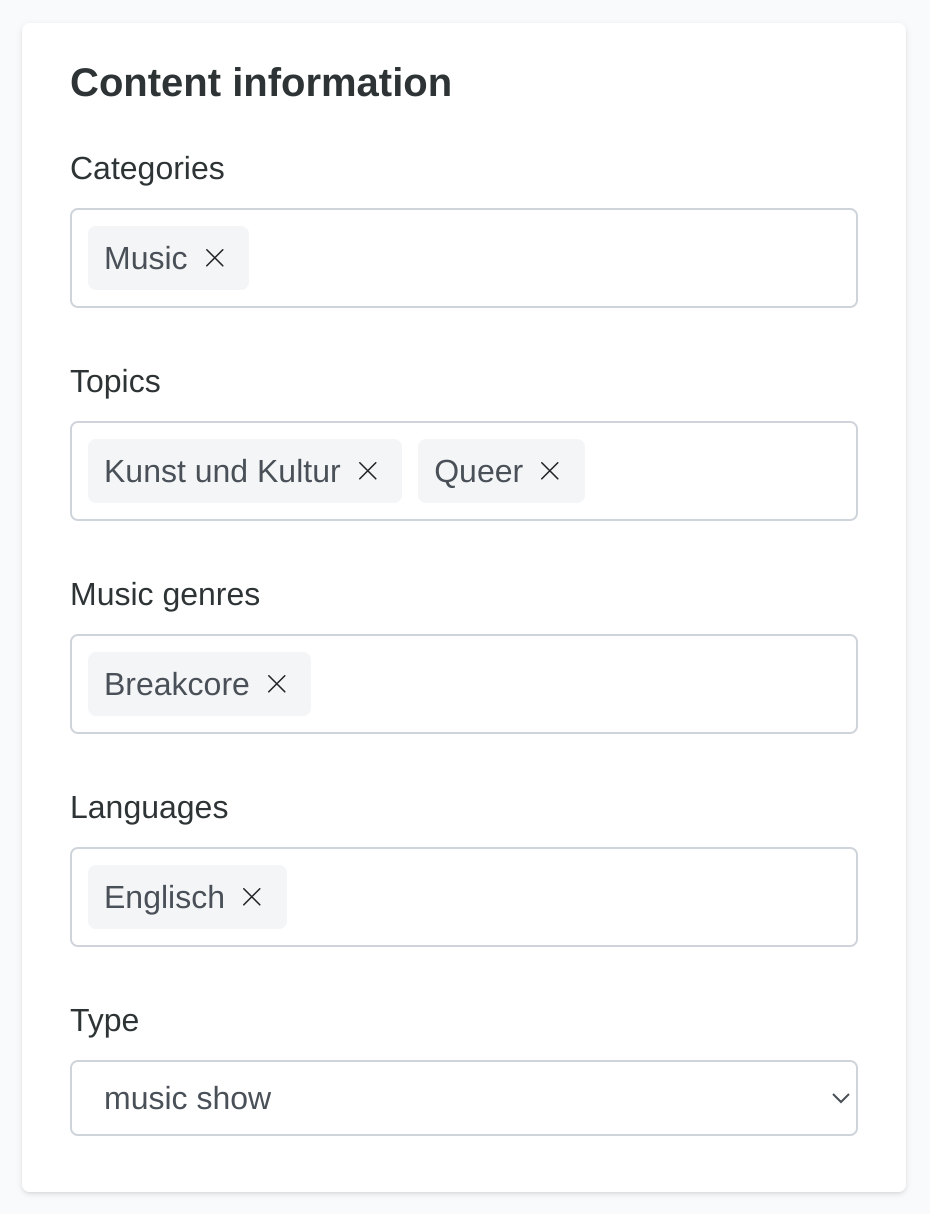
This section is used to assign content categorization options. All available data you can select here is predefined in the Metadata Section of the Radio Station Administration.
The topics and languages fields can be overridden and extended at the episode level.
Editors & contact information
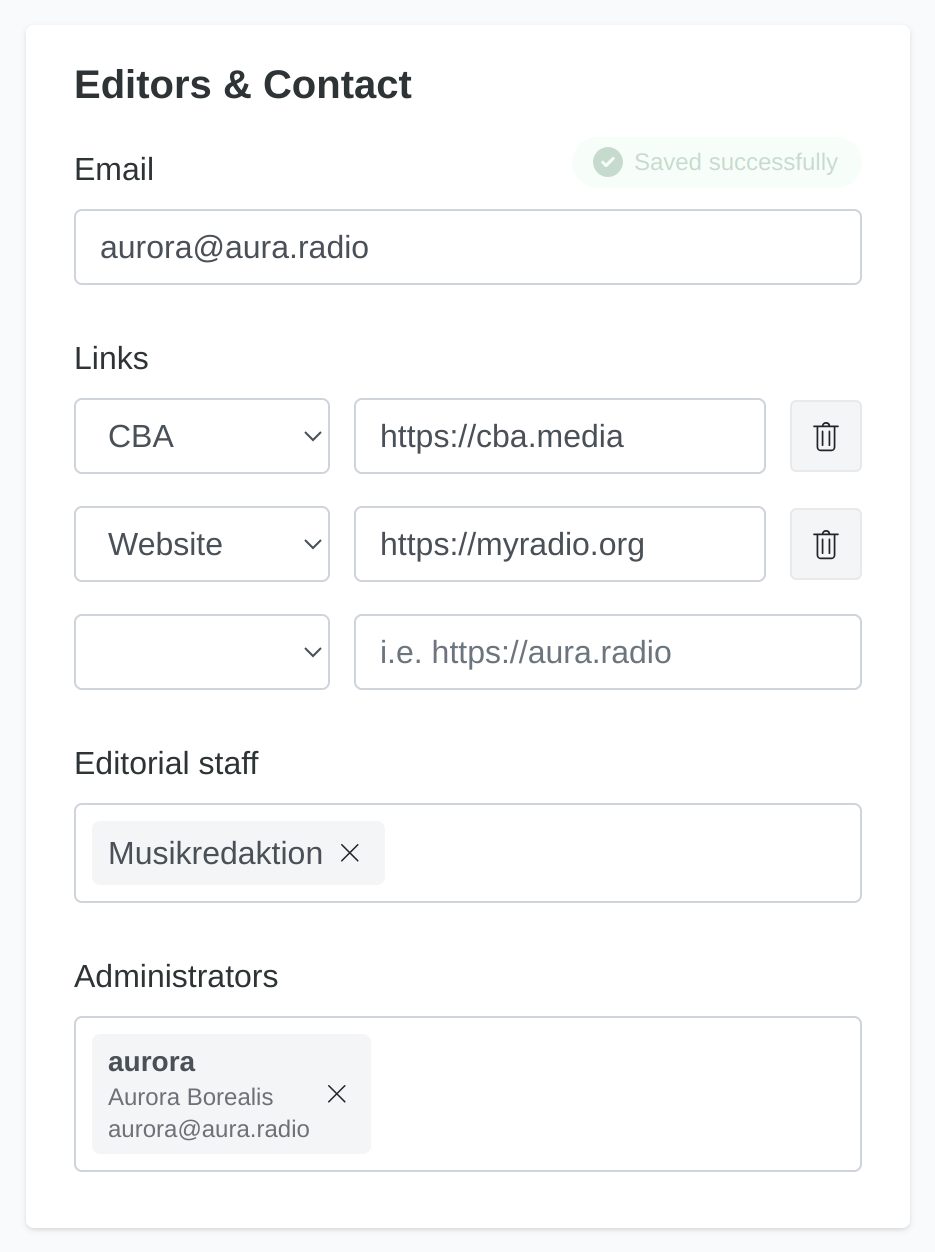
Define contact information, such as an email, to allow people to reach out to your show team. Depending on the radio station’s settings, this information may be used privately, publicly, or a combination of both.
You can define a set of links to be displayed on the show’s webpage. The available link types are defined individually by the radio station in the Radio Station Administration.
The editorial staff refers to a set of public profiles of individuals who typically host the show. These profiles are displayed in the show details on the radio station website.
The list of administrators defines user accounts that are permitted to log in to the Dashboard and manage the show and episode details.
Administrative information
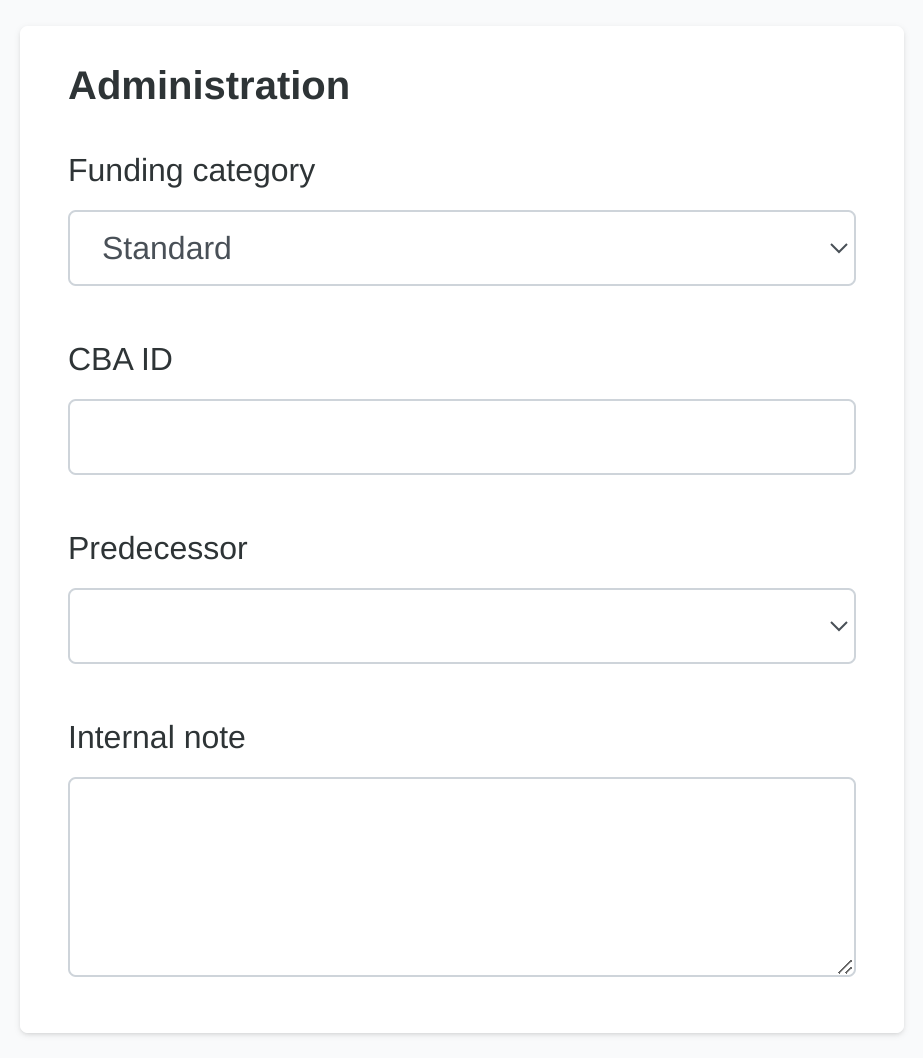
Funding category: Required for regulatory or funding purposes in certain areas. The available options can be freely defined in the Metadata Section of the Radio Station Administration.
CBA ID: Use this field to store the CBA podcast series ID. The field will be used for automatic uploading of episodes to the *Cultural Broadcasting Archive (CBA)*. It is recommended to fill out this field in advance. Using this field is also the preferred way to link to CBA podcast pages from your website, instead of using the Links field (see Integrating with CMS and Website).
Predecessor: This field can be used to refer to a historically related, preceding, but ended show. This is a special use case and can generally be ignored in most scenarios.
Internal note: Private text field for Program Managers to store notes about shows and their staff. This text can only be edited and read by Program Managers and Administrators. It can be useful for storing remarks, such as special contact information, details about a host’s sick leave, or any other information that may assist with organizational tasks.
Number of people involved: Number of people involved in the end-to-end production of the show, beside the ones already listed as editorial staff. For the purpose of statistical analysis and RTR reporting (”Offener Zugang”).
Storage Quota (MiB): Storage quota for the show in megabytes. The default quota defined in radio station settings is set to 10 gigabytes (10240 MiB).A value of 0 means that the show is not limited in its storage usage. When enabled a progress bar shows the used quota.
Default media sources
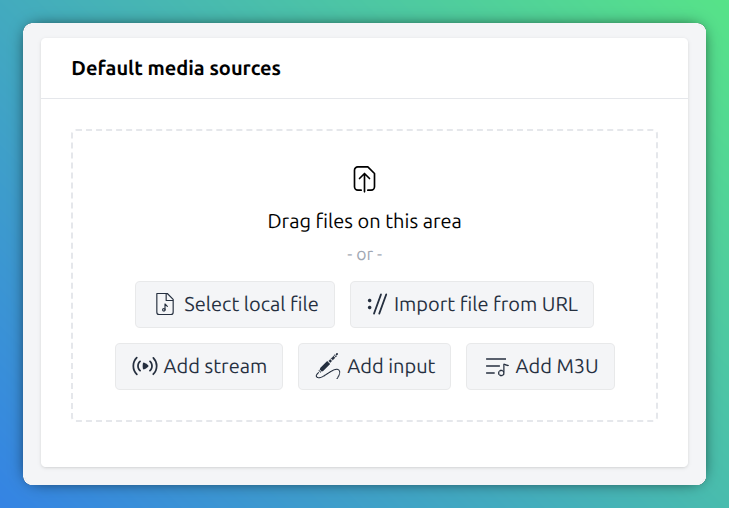
In this section, you can assign default media sources.
Any audio source assigned here will be used when no other audio source is assigned at the schedule or episode level. For more information on the mechanics of assigning media sources, refer to the Media Management chapter.
Danger Zone
This section contains operations that should be handled with care, as they can result in irreversible outcomes.
All operations in the Danger Zone require you to confirm the action in an additional dialog to prevent accidental execution.
Deactivate show
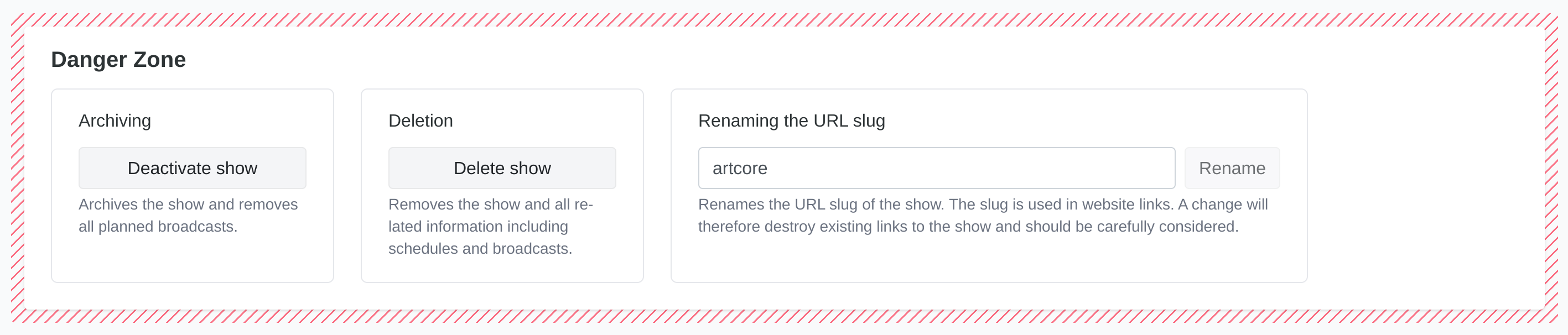
Use the Deactivate Show (1) button to disable a show. Deactivating a show marks it as inactive and deletes all existing and future timeslots. Once deactivated, editorial staff can no longer edit show or episode details.
The system automatically sets the first broadcast date when the first timeslot is scheduled. Upon deactivation, the last broadcast date is set to match the final active timeslot before the deactivation date. These dates define the active show period for reports and web displays.
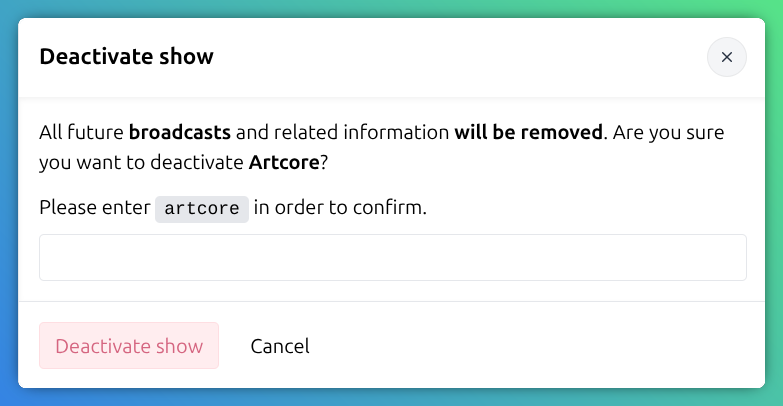
Confirmation dialog when deactivating a show.
Delete show
The Delete Show (2) button permanently deletes the selected show and all related data. This action should only be used if the show was created by mistake. Typically, you should deactivate a show rather than delete it, as deactivating preserves historic show data, which may be displayed on the radio station’s website.
Always prefer deactivation over deletion
If unsure, deactivate the show instead of deleting it. Deleting a show permanently removes all historical data and is irreversible.
Rename show slug
The Rename Show Slug (3) button allows you to rename the show slug.
When renaming a show title, you may also want to update the show slug. Keep in mind that changing the slug can result in broken URLs on the radio station website. Be sure to consult with your IT team before renaming the slug.